
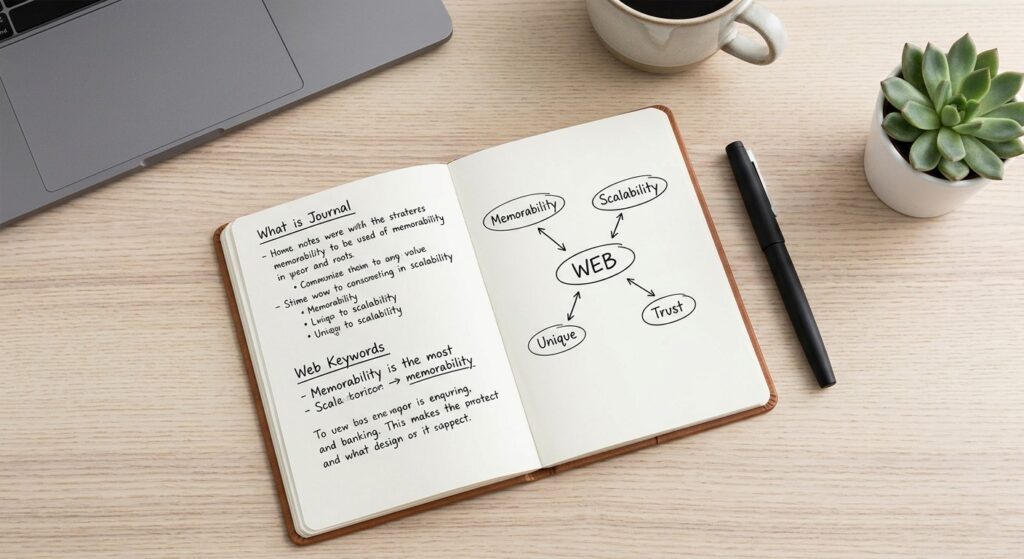
A brand name is more than just a label. It is the first handshake between your business and your customer. It carries your reputation, dictates your marketing strategy, and acts as the foundation for your entire brand identity.
Choosing the right name can be the difference between standing out in a crowded market or fading into the background. A strong name builds trust instantly, while a weak one creates friction. This guide provides actionable brand name ideas and a proven framework to help you select a name that scales with your ambition.
What Makes a Powerful Brand Name?
Before you start brainstorming, you need to know what a “good” name actually looks like. The best brand names share four core traits:
- Memorability: It sticks in the mind after one hearing. Short, punchy names usually win here.
- Clarity: It shouldn’t be a puzzle. While it doesn’t have to describe exactly what you do, it should evoke the right “feeling.”
- Uniqueness: It must stand out from competitors to avoid legal issues and consumer confusion.
- Flexibility: A great name allows your business to grow. If you name your company “The Red Pen Shop,” you might struggle to sell blue markers later.
How to Choose a Brand Name: Key Factors
Choosing a name requires a balance between creativity and logic. Use this checklist to evaluate your top creative business names.
| Factor | Why It Matters | Quick Tip |
| Pronunciation | If people can’t say it, they won’t share it. | Say it out loud 10 times fast. |
| Memorability | Word-of-mouth marketing relies on recall. | Keep it under three syllables. |
| Domain Availability | Your online presence is your storefront. | Check .com availability first. |
| Brand Fit | The name must match your brand’s “vibe.” | Does it sound like your price point? |
| Scalability | Your name shouldn’t limit your future. | Avoid specific city or product names. |
| Uniqueness | You need to clear legal and SEO hurdles. | Search the name on Google and USPTO. |
Step-by-Step Naming Process
Follow these brand naming tips to move from a blank page to a registered trademark.
1. Brainstorming Ideas
Start wide. Write down keywords associated with your mission, values, and the “feeling” of your product. Use metaphors, Latin roots, or even abstract sounds. Don’t censor yourself at this stage; just generate volume.
2. Filtering Names
Narrow your list to 5–10 favorites. Apply the “Factor Table” above. Eliminate names that are too hard to spell, sound too similar to competitors, or have negative meanings in other languages.
3. Checking Availability
Before you get attached, check for digital and legal clearance.
- Domain: Is the .com available? If not, is there a clean alternative?
- Social Media: Are the handles open on Instagram, LinkedIn, and X?
- Trademark: Search government databases to ensure you aren’t infringing on another business.
4. Testing with Real Users
Show your top three names to people in your target demographic. Don’t ask, “Do you like this?” Instead, ask, “What kind of company do you think this is?” and “How do you think this is spelled?”
5. Final Validation
Once you have a winner, sleep on it. If you still feel confident and excited 24 hours later, pull the trigger. Secure the domain and file for your business license immediately.
Tips for Creating Unique Brand Names
If you are stuck, use these professional techniques to spark new ideas:
- Word Blending (Portmanteaus): Combine two words that represent your brand. For example, Pinterest (Pin + Interest) or Microsoft (Microcomputer + Software).
- Symbolism: Look for objects or animals that represent your brand’s core trait. Evernote uses an elephant because they “never forget.”
- Sound Patterns: Use alliteration (Best Buy) or rhythmic sounds. Human brains are wired to remember rhythmic patterns more easily.
- Foreign Inspiration: Look at Latin, Greek, or Sanskrit roots for words that describe your industry. These often sound timeless and premium.
Common Mistakes to Avoid
- Being Too Literal: Calling a company “The Online Shoe Store” makes it impossible to brand or protect legally.
- Choosing “Copycat” Names: Changing one letter of a famous brand is a recipe for a lawsuit.
- Hard-to-Spell Words: If you have to spell your name every time you say it over the phone, it’s a bad name.
- Limiting Geographically: Adding your city name (e.g., “Miami Tech”) makes expanding to other regions awkward later.
- Using Internal Jargon: Your name should make sense to your customers, not just your engineers.
Conclusion
At OrbyOx, we believe that choosing a powerful brand name is the first major milestone in your business journey. It requires a mix of creative exploration and cold, hard logic. By focusing on memorability, scalability, and clarity, you create a brand that people can trust and remember.
Take your time with the process. Use the brand name ideas and the step-by-step framework above to filter out the noise. Once you find a name that resonates, protect it, build it, and watch your brand grow.
Frequently Asked Questions (FAQ)
Start by listing your brand’s core values and target audience. Use word-association exercises, look for metaphors, and explore Latin roots to create a list of potential names that reflect your brand’s personality.
Generators are great for sparking initial inspiration, but they often produce generic or unavailable names. Use them for brainstorming, then refine the results using the “Step-by-Step Naming Process” mentioned above.
Generally, shorter is better. Short names are easier to remember, simpler to fit on packaging, and less likely to be misspelled by customers looking for you online.
You can, but “rebranding” is expensive and can cause you to lose SEO authority and customer trust. It is much more efficient to invest the time now to choose a name that can grow with you for decades.
Check the USPTO trademark database (or your local equivalent), search for the name on Google, and look for available domain names. If another business in your industry is using a similar name, it’s best to move on to a different idea.